
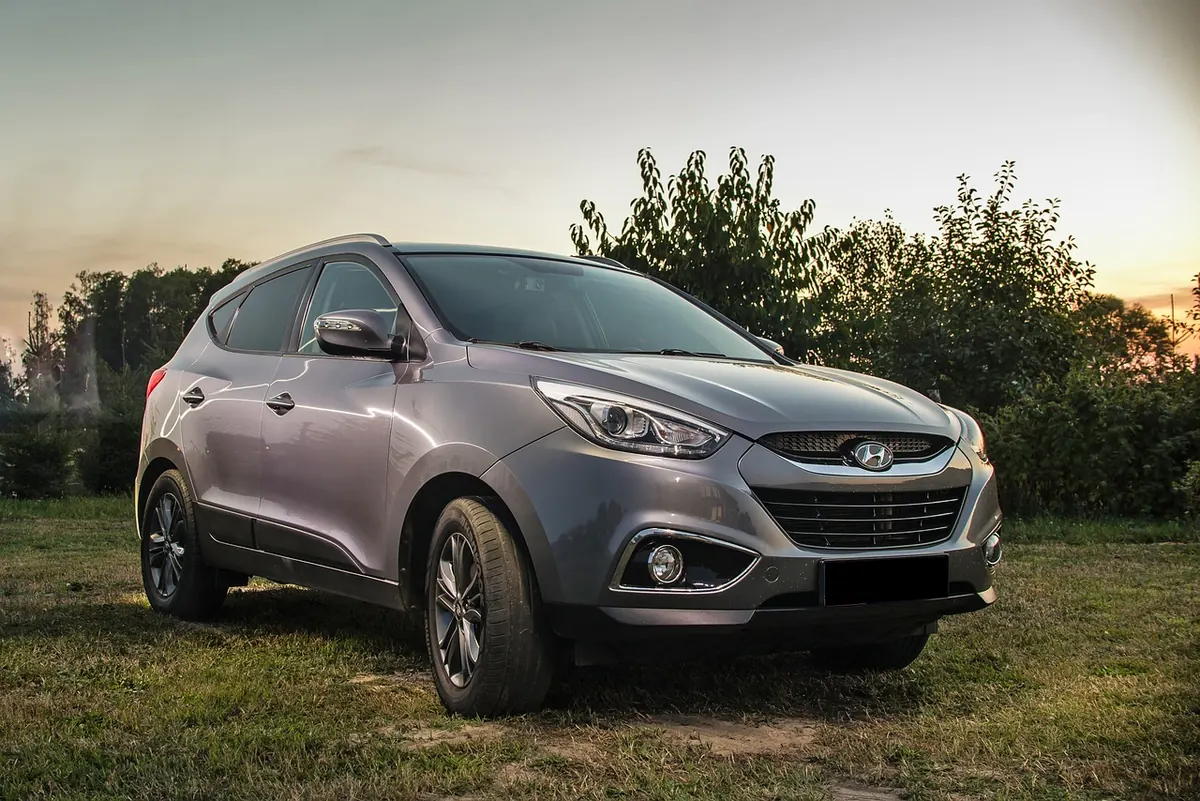
The Ford Explorer and Ford Edge look like siblings on a dealer lot, and plenty of shoppers cross-shop them without quite knowing why. Both are two-box Ford crossovers with respectable ground clearance, both offered all-wheel drive, and both spent years as the brand's volume family haulers. The difference shows up the moment you open the doors: one is a three-row mid-sizer, the other a roomy two-row. That single distinction drives almost everything else, from insurance and fuel bills to which one you should actually buy used.
Two Sizes, Two Different Jobs
The Explorer is the bigger vehicle, and it has been for its entire modern run. The fifth-generation Explorer (2011–2019) rode on a front-drive-based unibody platform, while the sixth generation (2020 and newer) switched to a rear-drive-based chassis that drives and tows more like a truck. Either way, you're looking at roughly 199 inches of length and a footprint that fills a standard garage bay.
The Edge is about a foot shorter and noticeably narrower. It was built on the same platform family as the Fusion sedan, which is why it feels car-like from the driver's seat. Ford sold it in North America through the 2024 model year, so used inventory is deep and prices have softened now that it's out of production.
For parking, the Edge wins without argument. For hauling mulch, bikes, or a dog crate plus luggage, the Explorer's extra width and length pay off.
Seating and the Third-Row Question
The Edge seats five. That's it. The second row is genuinely comfortable for adults, and there's decent cargo space behind it, but there's no hiding a third passenger in a pinch.
The Explorer seats six or seven depending on whether you find one with second-row captain's chairs or the bench. That third row is the whole reason many buyers end up here, but be honest about how you'll use it. In the fifth-generation Explorer, the third row is tight for adults on longer trips, and with it raised, the cargo area behind is shallow — enough for grocery bags and a stroller, not much more. The sixth-generation model improved rear access and space, but it's still a kids-and-occasional-adults row.
Quick reality check before you shop
- If you regularly carry five people plus gear, the Explorer's third row lets you fold one side and still seat everyone.
- If you carry four or fewer and want easy parking, the Edge does the same daily work for less money and less fuel.
- If you need to tow more than a small utility trailer, check the specific Explorer's rating — it varies widely by engine, axle ratio, and whether the tow package was ordered.
Fuel Economy and Powertrains
The Edge's engine lineup is simple. Most examples use a 2.0-liter EcoBoost four-cylinder, and the sporty Edge ST brought a 2.7-liter twin-turbo V6. Front-wheel drive was standard, with all-wheel drive optional. Because the Edge is lighter and smaller, it consistently uses less fuel than a comparable Explorer — usually a few miles per gallon better in mixed driving.
The Explorer's menu is broader and more confusing. The 2011–2019 models came with a 3.5-liter V6, a 2.0-liter or 2.3-liter EcoBoost four, and twin-turbo V6s in Sport and Platinum trims. From 2020, the base engine became a 2.3-liter EcoBoost, with a 3.0-liter twin-turbo V6 in the ST and a hybrid option available for several years.
Practical takeaway: if fuel cost is a real line item in your budget, the four-cylinder Edge is the cheapest of the group to run. If you want towing capacity or the hybrid, you're shopping Explorers, and you should confirm exactly which powertrain is under the hood before you make an offer.
Common Issues to Inspect on Each
Both vehicles have known weak points, and none of them are deal-breakers if you inspect carefully and price the repair into the deal.
Ford Edge
- Coolant loss on 2.0-liter EcoBoost engines. Some engines developed coolant intrusion linked to the cylinder head. Look for low coolant with no visible external leak, and have a mechanic pressure-test the system.
- All-wheel-drive power take-off unit. The PTU on AWD models holds a small fluid volume and can run hot. Ask whether the fluid has ever been changed; a whine or seep is a warning sign.
- Six-speed automatic behavior. Harsh or delayed shifts are a common complaint. Drive it cold from a stop and note anything sloppy.
- Infotainment. Early MyFord Touch systems were slow and glitchy. Confirm the screen, backup camera, and phone pairing all work.
Ford Explorer
- Internal water pump on the 3.5-liter V6. On 2011–2019 models, the pump is driven by the timing chain, and a failing unit can push coolant into the oil. Check for unexplained coolant loss and inspect the oil for a milky appearance.
- Exhaust odor complaints. Some fifth-generation owners reported exhaust smells in the cabin, and Ford issued a service program covering certain years. Ask whether the relevant work was performed.
- Transmission and software quirks. The 10-speed automatic in 2020-and-newer Explorers drew early complaints about rough shifting that were often addressed with software updates.
- Third-row and rear climate hardware. Test every seat latch, the rear blower, and the power-folding third row if equipped.
What the Used Market Looks Like
The Edge is the budget play. Because it's a two-row crossover competing against a crowded field of used RAV4s, CR-Vs, and Equinoxes, it doesn't command a premium, and a well-kept example usually asks less than a same-year Explorer. You also tend to get more equipment per dollar — leather, a panoramic roof, and driver-assist features show up on mid-grade Edge trims.
The Explorer holds value better because three-row family haulers are always in demand. Expect to pay more for a comparable year, and expect the gap to widen on sixth-generation models.
Don't over-index on trim names alone. An Explorer XLT with the tow package and a documented service history is a better buy than a Platinum with gaps in its records.
Which One Fits Your Family?
- Choose the Edge if you have two kids, one dog, a tight garage, and a commute that makes fuel costs matter.
- Choose the Explorer if you carpool, tow a camper, or regularly carry six people and still need cargo room.
- Choose either if you want a comfortable highway cruiser with available all-wheel drive — the deciding factor is really seat count.
Before You Hand Over the Money
Ask for the VIN and run it through Ford's recall lookup and a vehicle history service, then confirm which recalls were actually completed rather than just announced. Get a pre-purchase inspection from a shop that isn't the seller's — a hundred-odd dollars is cheap insurance against a coolant or transmission problem. On an AWD model, specifically ask the mechanic to check the power take-off unit and the rear differential.
Have the seller start the vehicle cold so you can hear the first thirty seconds of idle and feel the first few shifts. Pull the dipstick, check the coolant level, and look underneath for fresh seepage. Then check the boring stuff: tire tread depth across all four, brake pad life, and whether all the keys and floor mats came with it.
Whichever you pick, budget a few hundred dollars for immediate maintenance — fresh fluids, filters, and a set of wiper blades. A used crossover that's been caught up on maintenance will treat your family better than one bought at the lowest possible price.
Photo: rkarkowski / Pixabay
Related posts
More stories you’ll love reading