A lantern earns its place on a fall dining table because it does two jobs at once. It holds light, and it gives the eye a fixed point to settle on while everything else — branches, linen, candles, plates — moves around it. The catch is that most lantern centerpieces fail for one of two reasons: the lantern is too tall, so you end up talking to a lamp instead of your guests, or the foliage is piled so high that the candles disappear inside a hedge.
Both problems have simple fixes. The order below is the one worth following: lantern first, light second, foliage third, and the rest of the table last. That sequence keeps you from buying branches for a lantern that never quite worked.
Start With the Lantern, Not the Foliage
Size and proportion
For a table seating four to six, a single lantern somewhere between ten and fourteen inches tall tends to sit comfortably without blocking anyone's view. Once you pass roughly eighteen inches, the lantern becomes a monument, and the people across the table start leaning sideways to see each other. If you love a large lantern, use it on a sideboard and keep the table itself low.
For rectangular tables, three lanterns in graduated heights — think eight, twelve, and sixteen inches — read better than one big piece. Odd numbers, staggered heights, and a little breathing room between them. Skip the matching set of three identical lanterns; the eye likes a slight variation.
Finish and glass
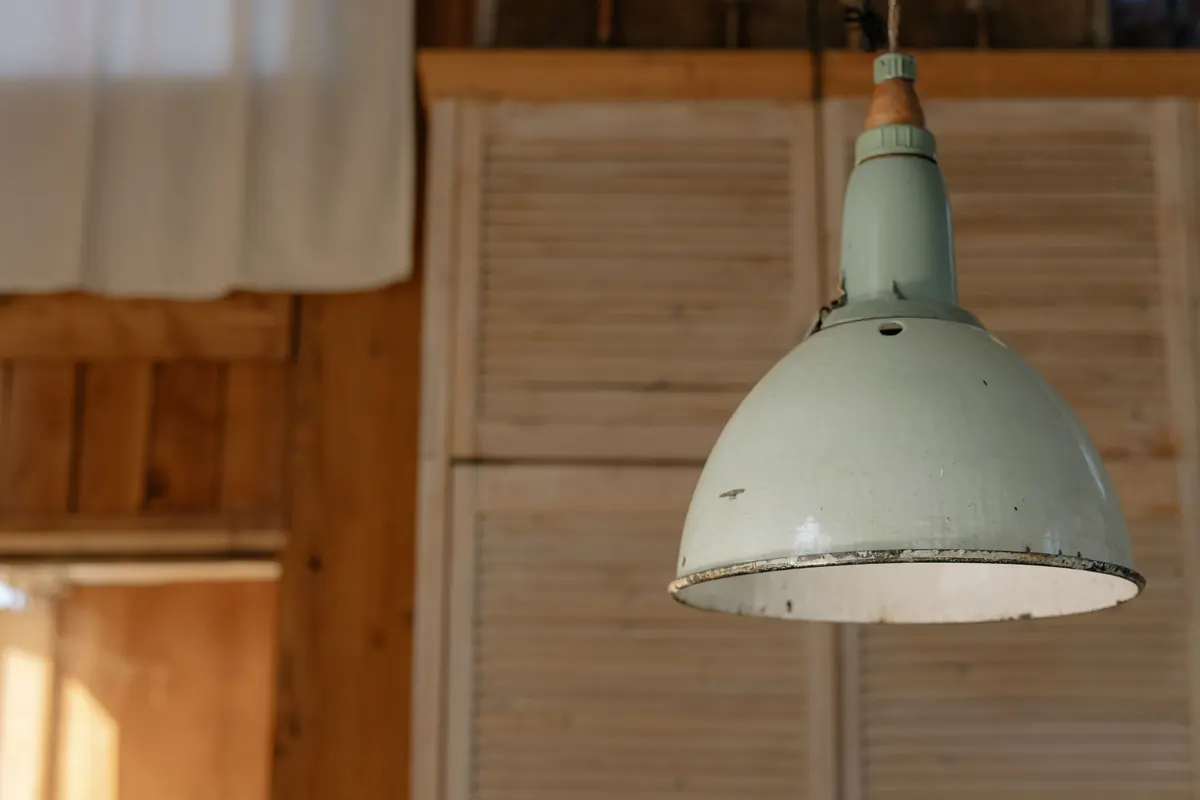
Match the metal to the room rather than the season. Matte black and dark bronze look sharp against pale linen and white china. Aged brass and antique gold warm up oak and walnut and pair naturally with amber candles. Weathered zinc or pewter suits a farmhouse table and unpainted wood.
Glass matters more than people expect. Clear glass throws the most usable light, which is what you want on a fall evening. Seeded, ribbed, or slightly amber glass softens the glow and hides drips and soot, but it also dims the flame. If your dining room is already dim, choose clear.
Get the Light Right
Real candles set a mood nothing else quite matches, and they require a little care. Use a pillar inside a glass hurricane, or a votive in a glass cup, so the flame sits below the rim and stays out of any draft. Keep at least a few inches of clear space between a flame and anything dried — dried leaves, wheat, pine, and pods are all flammable, and it takes very little for a curling leaf to lean into a wick.
Never let candles burn unattended, keep paper napkins and runners away from the flame, and set the arrangement back from the edge where sleeves and elbows pass. If children or pets share the table, battery pillar candles with a warm flicker are the calmer choice; look for warm white rather than cool white, which reads blue and clinical next to autumn color.
Vary the heights. Three or four candles at different levels inside the lantern give a fuller glow than one tall candle, and small votives scattered along the runner extend the light past the lantern's footprint.
Foliage: Two or Three Elements Is Plenty
The most common mistake is treating the base of the lantern like a flower bed. Restraint looks expensive; abundance looks like a craft store. Pick one soft, drapey element, one structured leaf, and one dry accent.
- Soft and drapey: seeded or silver dollar eucalyptus, olive branches, trailing rosemary
- Structured: magnolia leaves, oak leaves, small ferns, bay
- Dry accents: dried hydrangea, wheat, seed pods, bittersweet, a few small gourds
Lay the stems rather than arranging them upright. Let eucalyptus run along the runner and spill past the lantern's base; tuck the cut ends underneath where no one will see them. Then add the structured leaves in small clusters of three or five, at different angles. If you use berries or pods, remember they are decorative only — keep them off the plates and out of reach of children and pets.
An arrangement you can see over is worth more than one you can only photograph.
Layer the Table Around It
Once the lantern is set, build outward in layers. A linen runner roughly the width of your lantern's footprint ties the pieces together; if you prefer a full tablecloth, put the lantern on a flat wooden tray or a wide platter instead. The tray defines the centerpiece zone, makes cleanup easier, and stops a wobbly base from scratching the wood.
Keep the palette to three tones. Cream, amber, and deep green. Rust, brass, and chocolate. Plum, sage, and copper. Then let the plates stay quiet — off-white, stone, or plain linen. Two metals at most on the table, and if the lantern is the star, keep flatware simple.
Assemble It in Five Steps
- Run the runner down the center, or set the tray in place. Check that it sits straight from every chair.
- Position the lanterns, spaced evenly with a few inches between them.
- Lay the foliage at the base, working from the largest stems outward and never forward of the plate line.
- Add candles to the lanterns, then slot votives and small gourds into the gaps along the runner.
- Sit in a chair. If the centerpiece hides the person opposite you, remove a third of what you placed.
That last step matters most. Editing down almost always improves the result, and it usually takes less than a minute.
Tune It to the Table and the Hour
Round tables do best with one symmetrical cluster at the center, slightly lower than you would use on a rectangle. Long rectangular tables take three clusters along the runner, spaced so there is clear room on each side for plates, glasses, and elbows.
Daytime meals need more foliage and more color, because there is no flame doing the work; swap in extra leaves and a few small squashes. Evening meals can go leaner — fewer branches, taller candles, more glass. The glow fills in what you leave out.
A Ten-Minute Reset Before Guests Arrive
Trim the wicks, replace any water in a small vase, and clear fallen leaves from the runner. Light the outer candles first and the lantern last, so the centerpiece comes alive as people sit down. Keep a box of matches and a candle snuffer within reach, on the sideboard rather than the table.
And keep one thing in mind for the rest of the season: a lantern on a bare table, with nothing but a candle inside it, is not a failure. Some nights that is exactly the right amount.
Photo: ArtHouse Studio / Pexels